

Articles on the topic
Triebschnee
-
SnowFlurry
SnowFlurry 13 2020/21 | Powder: Not all that glitters is dust
03/27/2021 • Stefanie Höpperger The new onset of winter, which began on 14.3.21, brought a lot of fresh snow along with huge powder turns. However, this increased the risk of avalanches again. The biggest problems here were the freshly formed drift snow and the sometimes heavy amounts of fresh snow. Drift snow can usually be easily recognized in the terrain, but this problem can also prove to be treacherous, as has been the case recently.
-
SnowFlurry
SnowFlurry 12 2020/21 | First firn then powder on crust
03/13/2021 • Stefanie Höpperger Today I'm showing you the relevant layers for us before and after the snowfall at the beginning of March using several profiles. It's expected to snow heavily again in the northern Alps next week - so it's all the more important to know what's underneath the fresh snow!
-
SnowFlurry
SnowFlurry 6 2020/21 | Mechanical conversion
12/26/2020 • Stefanie Höpperger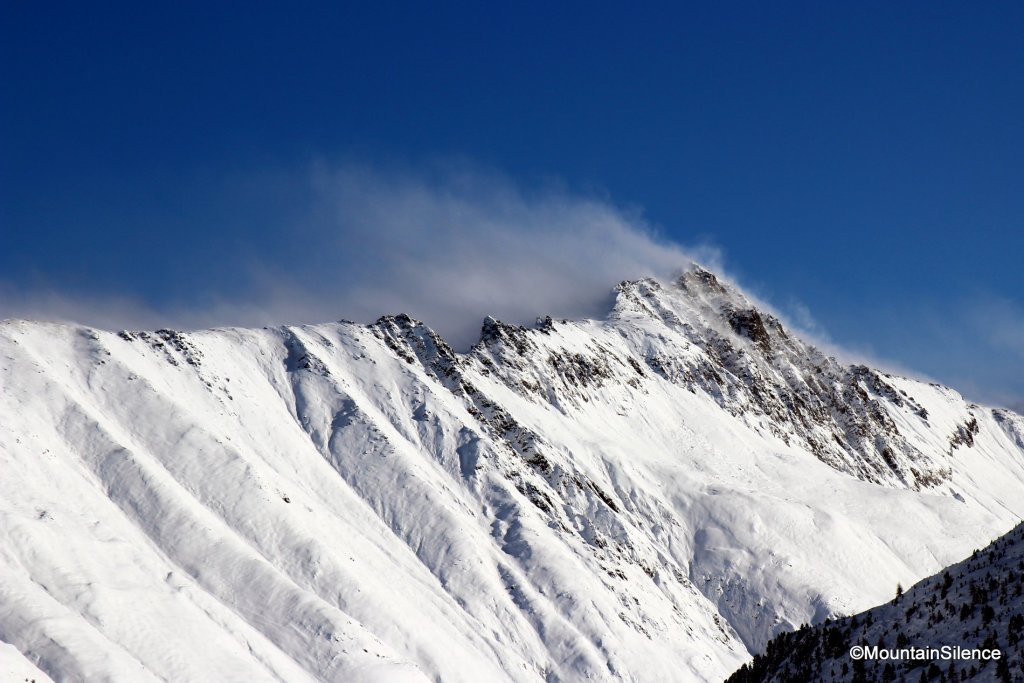 In addition to the constructive and degradative transformation, which have often been discussed in SnowFlurry, there is also mechanical transformation. Today we ask ourselves: What happens to snow crystals during mechanical transformation? What does the formation of drift snow have to do with it and how does it actually develop?
-
mountain knowledge
Accident statistics: different user groups, different avalanches
11/11/2020 • Lea Hartl Peter Höller, avalanche expert at the BFW in Innsbruck, has analyzed accident statistics from the Austrian Board of Trustees for Alpine Safety. He found that fatal avalanches in the variant area close to ski resorts are often due to new and drift snow problems, while there are proportionately more fatal accidents on classic ski tours with old snow problems.
-
news
World of Science | Review ISSW2018: Avalanche protection measures
03/05/2020 • Anselm Köhler The International Snow Science Workshop (ISSW) brings together scientists and practitioners from a wide range of snow-related fields every two years. New findings and research results are presented in various thematic blocks - so-called sessions. We break the whole thing down into more or less digestible morsels and summarize the sessions of the ISSW2018 for you every two weeks.
-
SnowFlurry
SnowFlurry 14 2019/20| Powderdays!
02/22/2020 • Stefanie Höpperger The warm temperatures continue in February. Where it is more like spring in the valley, the touring conditions at altitude are still good, even if the snow depth in Kühtai is slightly below average for mid-February.
-
SnowFlurry
SnowFlurry 12 2019/20 | An old snow problem complicates tour planning
02/08/2020 • Stefanie Höpperger Tour planning proved to be rather difficult last week, as an old snow problem in the terrain is not easily recognizable. This makes it all the more important to use your head when planning at home and choose a suitable tour carefully.
-
PowderAlerts
PowderAlert 12 2019/20 | North jam without flushing.
02/03/2020 • Lars OelmannLast week, Ullr made a brief appearance from early retirement, only to be washed away again by tropical masses of rain. This week is better, because first of all it's snowing everywhere in the northern congestion, and then it's staying dry so that you can use the snow for longer. -
SnowFlurry
SnowFlurry 11 2019/20 | Pimple powder as a weak layer
02/01/2020 • Lukas Ruetz A built-up, loose snow cover from the ground to the snow surface is a product of prolonged periods of fine weather in early and mid-winter. This snow, known as nap powder, forms a weak layer that must be taken seriously as soon as it has been snowed in. This is currently the case in wind-protected and little-traveled W-N-E slopes at high altitudes.
-
news
PartnerNews | More concise use of avalanche problems in the Swiss Avalanche Bulletin
12/31/2019 • PowderGuide In the avalanche bulletin, the typical avalanche problems are also indicated in the hazard description. While the avalanche danger answers the question "How high is the danger?", the avalanche problem gives an indication of "What is the problem?".
-
SnowFlurry
SnowFlurry 4 2019/20 | What happened to the snow cover during the long period of good weather?
12/14/2019 • Stefanie Höpperger Despite the warmer temperatures in the fine weather phase, the snow surface on shady slopes remained mostly loose. On the other hand, slopes exposed to strong sunlight - especially at lower altitudes - became damp on the surface and a cover could form due to cooling.
-
SnowFlurry
SnowFlurry 5 2017/18 | Why fresh snow increases the risk of avalanches
01/11/2018 • Lukas RuetzThe snow conditions are good for the time of year across the entire Alpine arc. Thanks to regular, quite remarkable fresh snowfalls. Intense fresh snowfall significantly increases the risk of avalanches. Why is that?

