Skip to content

Cookies 🍪

This site uses cookies that need consent.

Learn more

Zur Powderguide-Startseite Zur Powderguide-Startseite
equipment

Ski Workshop | Binding adjustment - Alpine bindings

How do I adjust my alpine ski binding correctly?

01/30/2025
Fritz Crone
Many skiers still leave the fitting and adjustment of bindings to specialist shops, although at least the adjustment of bindings is not particularly complicated. But are you actually allowed to adjust bindings yourself? Legally, this is a grey area. In theory, insurance companies can demand proof of binding adjustment by a specialist in the case of an insurance claim or accident, but in practice this happens extremely rarely. Adjusting your own bindings helps you to better understand your own equipment and to be able to help yourself when a problem arises. It is therefore worth trying. And in case of doubt? You can always ask a specialist shop for help.

This article is about the adjustment of regular alpine bindings, especially those used for freeriding. Alpine bindings are generally understood to be ski bindings that are only built for downhill skiing. In contrast to racing bindings, they do not have to be mounted on a race plate and therefore allow a low standing height above the ski. However, this is only possible as long as the skis are wide enough so that the ski boot is not dragged through the snow at sharp turns. This condition is always met with freeride skis and even with narrower park skis.

As hybrid bindings, i.e. alpine bindings that can also be converted into touring bindings, can often be adjusted in the same way, they will also be covered in this article. An additional article will be published in the near future on how to adjust pin bindings, i.e. lightweight bindings that are intended exclusively for touring.

Z-Value Determination

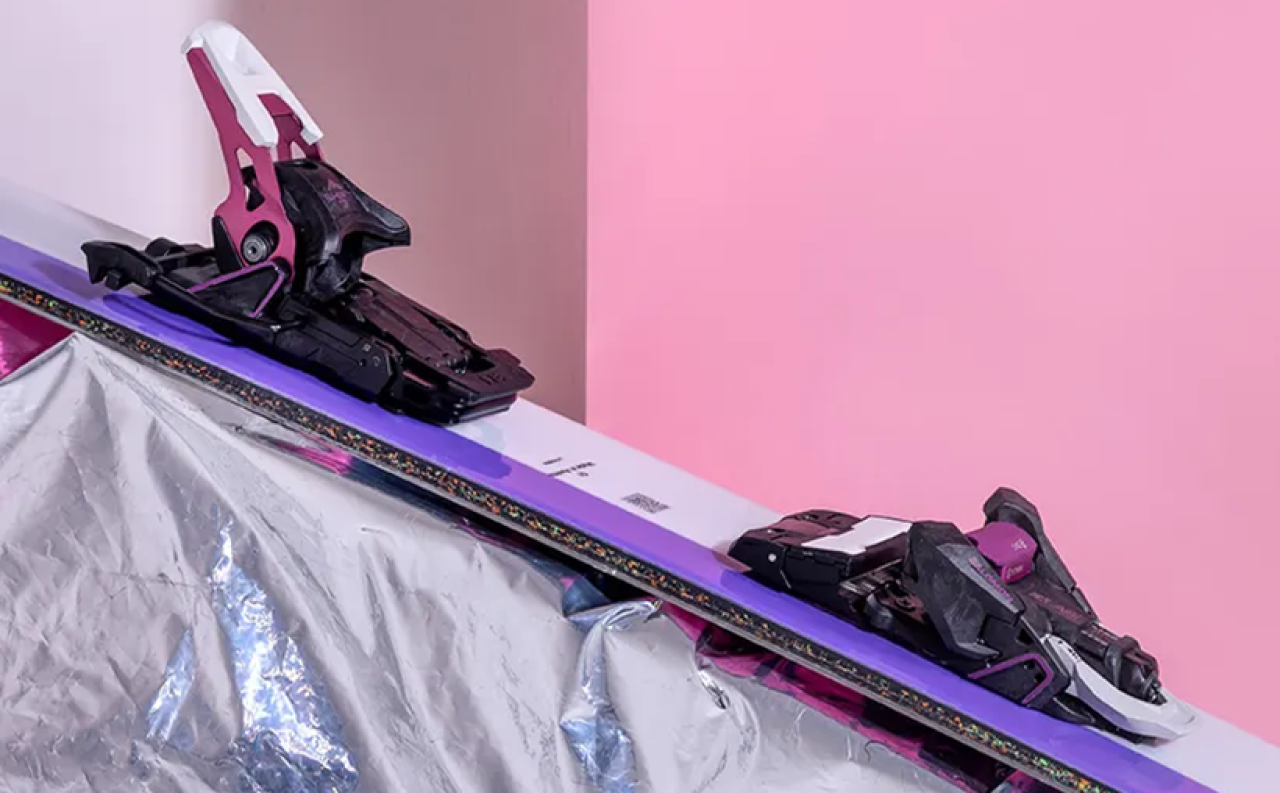
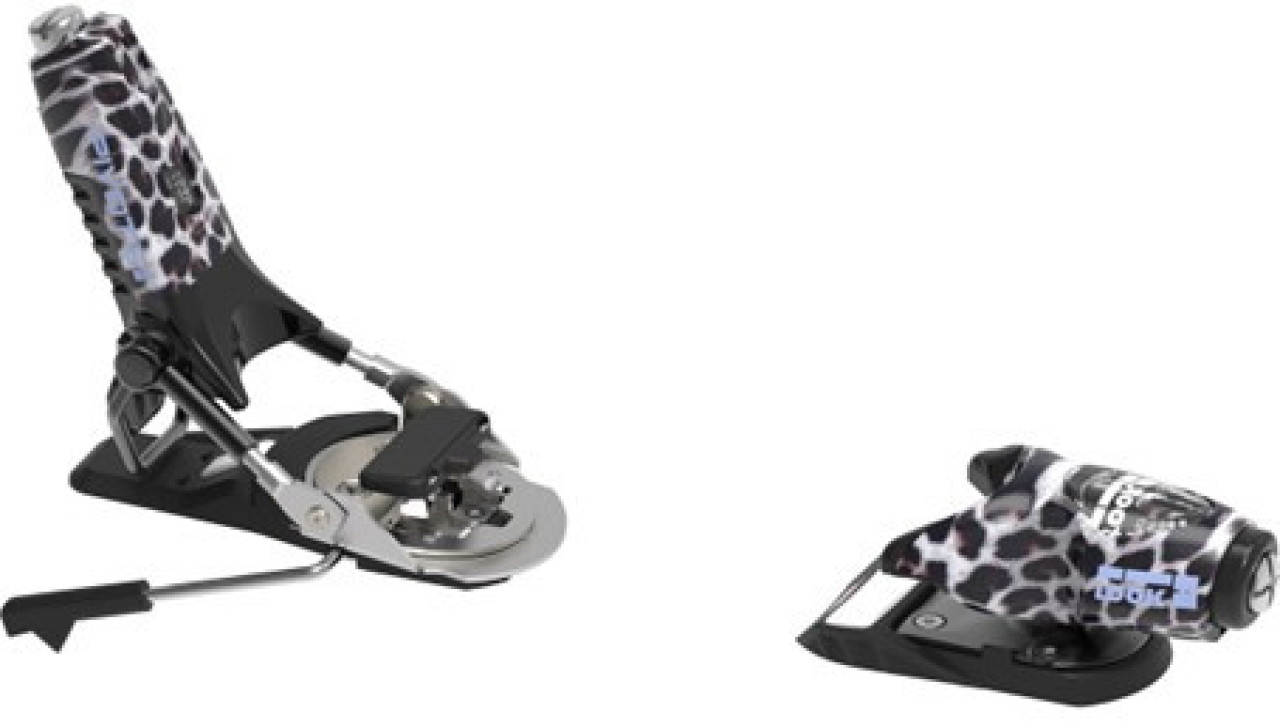
The Z-value, also known as the release value or DIN value, can be easily set on any binding. The scale for the Z-value can be found on the toe and heel pieces of alpine and hybrid bindings, usually behind a transparent protective plastic. The ski boot is pressed into the toe piece by the heel piece. The most common and up-to-date alpine bindings for freeriding are the Look Pivot, Marker Griffon/Jester, Armada/Atomic/Salomon Strive and the Tyrolia Attack models. Hybrid bindings work in the same way as alpine bindings, but also offer the option of climbing. The binding can be converted to ascent mode in just a few simple steps. The most widely used hybrid bindings are the Armada/Atomic/Salomon Shift, Marker Duke PT and the Cast Freetour Kit, which converts the Look Pivot alpine binding into a hybrid binding.

If you want to set your own Z-value, you should first determine the correct Z-value. With the weight method commonly used today, the weight, height, ski boot sole length in millimetres (not to be confused with the ski boot size in Mondopoint), skiing ability and age determine the Z-value. The tibia method, in which the tibia bones are measured, has no longer been part of the ISO 11088 standard since 2023. For this reason, we will only focus on the weight method.

If the Z-value is set too low, there is a risk of flying out of the binding too quickly and injuring yourself. If the Z-value is set too high, there is a risk of not flying out of the binding in time and injuring your knees (and everything attached to them) due to the large lever of the strapped-on ski.

The above-mentioned parameters of the weight method relate to the Z value as follows:

In general, the higher the Z value, the more force is required to release the binding.

High weight = higher Z-value

Large body size = larger Z-value

Longer ski boot sole length = lower Z-value

Good driving skills = higher Z-value

Under 10 years = lower Z-value

Over 50 years = lower Z-value

The table in ISO standard 11088 helps us to find the correct Z-value. First, we look for the column with the right sole length for our ski boot (the sole length is stamped in millimetres on the outside of each ski boot on the side of the heel just above the sole).

We follow the column with the sole length to the row with our weight or height, using the smaller value as a guide. This value is now the starting point for further customisation. To do this, we categorise ourselves into one of 3 "skier types".

Skier Types

Classification

Z-Value Adjustment

Typ 1

Careful skiing on gentle slopes with a slight to medium incline. This type also includes skiers in the beginner stage and those who are unsure of their classification. Type 1 skiers receive below-average settings with a higher risk of false releases.

The Z value remains as specified in the table.

  • If expressly requested, the binding may be set to the value in the column above (lower Z-value, -1)

Typ 2

Skiers who classify themselves as neither type 1 nor type 3.

We slide down one value in the column (larger Z value).

Typ 3

Fast, aggressive skiing on slopes with medium to steep inclines. Type 3 riders receive above-average settings with an increased risk of injury.

We slide down two values in the column (larger Z value).

  • If expressly requested, the binding may be set to the value of the column below (larger Z value, +3)

The last step is the age correction: if you are under 10 years old or over 50 years old, you move up one line in the table (lower Z value).

Z-value setting

We now set the determined Z-value on each toe and heel piece with a screwdriver. On most bindings, a small slide with a white marking moves when the correct screw is turned. The screw tensions the spring inside the binding and thus determines the forces required to release the binding. The adjustment screw is usually located at one end of this spring.

Toe Piece:

With classic freeride/freestyle bindings such as Look Pivot, Atomic/Salomon/Armada Strive, Shift and STH, the Z value is set using the front screw, which is usually very visible. On the Marker Squire, Griffon, Jester, Tyrolia Attack and Atomic/Salomon/Armada Warden, the screw for adjusting the Z-value is located on the side of the toe piece.

Heel Piece:

The screw is located either on the lever that snaps up when you get on (Look Pivot, Marker) or underneath this lever (easy to confuse with the screw for the contact pressure) (Atomic/Salomon/Armada, Tyrolia, Marker Squire 10).

If the screw is difficult to adjust, it often helps to pull up the automatic heel lever.

Example calculation for the correct Z value:

The Z value of the following person is to be determined:

  • 294mm sole length

  • 65kg

  • 175cm

  • Skier type 2

  • 37 years old

Solution:

Sole length 294 can be found in the fourth column (291-310 mm), with a weight of 65 kg you end up in the column with Z-value 4.5.

With a height of 175 cm you end up in the column with a Z-value of 5.5, but you have to decide in favour of the lower Z-value (see text above).

Skier type 2 means that we slide down one row in the column, which results in the Z value = 5.5.

The age correction is irrelevant, so our final Z-score is fixed: 5.5.

Function of the binding - elasticity, contact pressure, sole systems

For a bond to trigger properly, you have to give it the chance to function properly.

This includes:

  • Correct mounting of the binding

  • Binding adjusted to the length of the ski boot sole

  • Pressure set correctly

  • AFD plate set correctly (anti-friction device)

  • Z-value set correctly (already done)

  • Ski boot and binding freed from snow and ice

Now again in detail...

Fitting the binding

Fitting ski bindings requires a little more manual dexterity and tools. This is why many people get help from a specialist shop, but you can also do it yourself. A separate article will be published on this topic.

After the binding has been fitted, it is often worth taking a quick look at it.

Are the bindings centred (seen from the edges) on the ski? Are the skis mounted at the same height? (Caution: Recommended lines on conventional skis are often printed on the topsheet, these topsheets can be a few mm to cm off-centre on the ski, so the recommended lines would also be wrong. Tip: Simply measure from the tail with a tape measure).

Does the binding lie smoothly on the ski and is there no visible gap between the ski and the binding?

Ski boot sole length

Once the binding has been fitted perfectly, the next step is to adjust the binding to the length of the ski boot sole (the sole length is marked on each ski boot in millimetres on the outside of the lateral heel section just above the sole). With freestyle and freeride bindings, it is usual for the sole length to be taken into account when fitting the binding. With demo/rental bindings and alpine bindings, the sole lengths can be adjusted and the toe and heel pieces can then be adjusted on a slide marked with the sole lengths.

Contact pressure

The contact pressure is adjusted with a screw on the heel piece. We click the ski boot into the binding (if the ski boot does not fit in, we have to screw the heel piece back so far that it fits in. If there is too much space at the back, we have to screw the screw in until the binding can be closed). Each binding now has an indicator that tells us whether the contact pressure is correct. With Marker bindings, the screw must be flush with the housing of the binding, with some Atomic/Salomon/Armada bindings as well. Some bindings have a small window on the side of the rear jaw, where a line indicates the range for the contact pressure. If the indicator shows that the contact pressure is correct, you should take the boot completely out of the binding and put it back in and correct the contact pressure if necessary.

AFD-Plate

The AFD plate ensures that the boot is high enough in the binding and guarantees lateral release. As there are now several different soles for ski boots, the height of these can be adjusted in newer bindings. Once again, we place the ski boot in the binding and close it. Pull the ski boot backwards at the top end of the shaft (with force) and check whether there is a gap between the movable plate. If there is, screw the plate up until it touches the boot and check the contact pressure on the rear jaw (see contact pressure). Then place a folded piece of paper (preferably glossy paper, e.g. from an advertising catalogue) on the AFD plate and click the shoe back into the binding. The plate must now be screwed so high onto the shoe that the paper can just be pulled out of the gap without tearing. Because the settings of the contact pressure and the AFD plate can influence each other, it is worth adjusting the two together and checking each again. So we take the boot out of the binding again, click it back in and check whether the contact pressure and AFD plate are set correctly. Practice has shown that certain bindings should be adjusted with particular care (ex. shift bindings).

Now you can set the Z value (see above).

Off to the snow! Before you get into the binding, remove the snow and ice from the binding and your boots and off you go.

Photo gallery

Note

PowderGuide.com is nonprofit-making, so we are glad about any support. If you like to improve our DeepL translation backend, feel free to write an email to the editors with your suggestions for better understandings. Thanks a lot in advance!

Show original (German)

Related articles

Comments