Skip to content

Cookies 🍪

This site uses cookies that need consent.

Learn more

Zur Powderguide-Startseite Zur Powderguide-Startseite
Split/Snowboard

Splittie of the Week | Crampons

Crampons for your splitboard - an up-to-date overview.

02/09/2026
Tobias Leistenschneider
Before every tour of the splitboard group of my DAV section, we now check whether all participants have crampons with them - the right ones for their own bindings. This is not so trivial for some and requires support here and there. In this article, I would like to briefly explain why crampons are not a nice-to-have for us splitboarders, but an absolute must-have. You will also get a comprehensive overview of the current splitboard bindings and their corresponding crampons.

Why and when?

Here on PowderGuide there is a constant discussion about the advantages and disadvantages of soft boot setups versus hard boot setups. Here we generally assume that splitboards are inferior to skis on the ascent when it comes to traversing on relatively steep but hard slopes.

A slope can be hard because the wind has pressed the snow or because the fresh snow has been swept away by the wind and a hard layer underneath has been exposed. Another reason may be that the snow that warmed up during the day has frozen again overnight.

Take a look at the video here, from minute 10. Even such a supposedly harmless intermediate traverse can quickly become a challenge for us splitboarders. The reason for this is the much greater leverage due to the very wide splitboard halves in combination with a much more flexible construction of soft boot and strap binding. Incidentally, hardboot setups also have great leverage.

The problem is that these particularly wind-prone passages are often found at transitions such as chutes or gaps. The last few meters there are often simply steep. A fall here can quickly lead to an unpleasant slide with minor to serious injuries. Your own safety becomes even more relevant on exposed passages, because falling is not an option there.

And even if you don't fall or slide straight away, the constant feeling of insecurity in your stride on tough days is not conducive to the basic spirit of a splitboard tour.

Splitboarders should therefore gain experience in order to be able to anticipate such passages well in advance of the situation itself. Then it is important to put on the crampons, which is also a learning process. My experience has taught me that it's usually not worth trying to tactic and trying to catch the last call, because it's usually already too late.

It's better to take a leisurely drink and crampon break on the flat than to stand in a line later on the steep slope and try to mill them into the hard snow. It's not easy and, above all, people tend to lose other items of equipment such as poles, water bottles or entire backpacks that slide easily on hard snow.

Which crampons do I need?

As a tour guide, I am often confronted with rental equipment, especially when guiding beginners. I've experienced the most amazing things: once a participant with size 37 boots arrived with an XL Spark binding. Another time, someone had a skin with them that had obviously been pasted over with skin glue shortly before the tour. However, the glue had not dried out and had transferred to the base. We then placed the board in the fall line on hard snow and it just stayed there. But now to the crampons.

It seems easy to assume that a binding of brand X should also fit a crampon of brand X. Unfortunately, this is not always the case. Unfortunately, this is not always the case. Once a participant came with a Spark binding and a Spark crampon. However, this was during the transition period from the pin system to the Tesla system and the iron was the wrong one. No chance of using it. The easy Black Forest tour became a constant battle.

Another time we were sitting at the preliminary meeting and it was clear that we would all need crampons on the Alpine weekend, as it hadn't snowed for a long time. Among the participants were two with Union bindings without crampons. In fact, we didn't manage to get Union crampons within four days. They were sold out online and were also not available in the stores in Freiburg. In the end, we had to fall back on the equipment of other participants and the two of them were supplied with second bindings including crampons. That was just luck.

In addition to this brand and single binding compatibility, you also need to make sure you have the right size. Your boards all have different center widths. The crampon should have enough space on the left and right so that it doesn't scrape against the edge, but it doesn't have to be two centimetres. Spark, for example, offers three sizes: narrow, regular and wide. You can now find the exact details in the overview.

Check your gear. I'm not paid by the crampon mafia, but if you don't have one, then choose the right one here and buy it!

Note: For reasons of uniformity, I have given all widths in mm and in relation to the center width of the entire splitboard, not just that of the board half.

Spark R&D

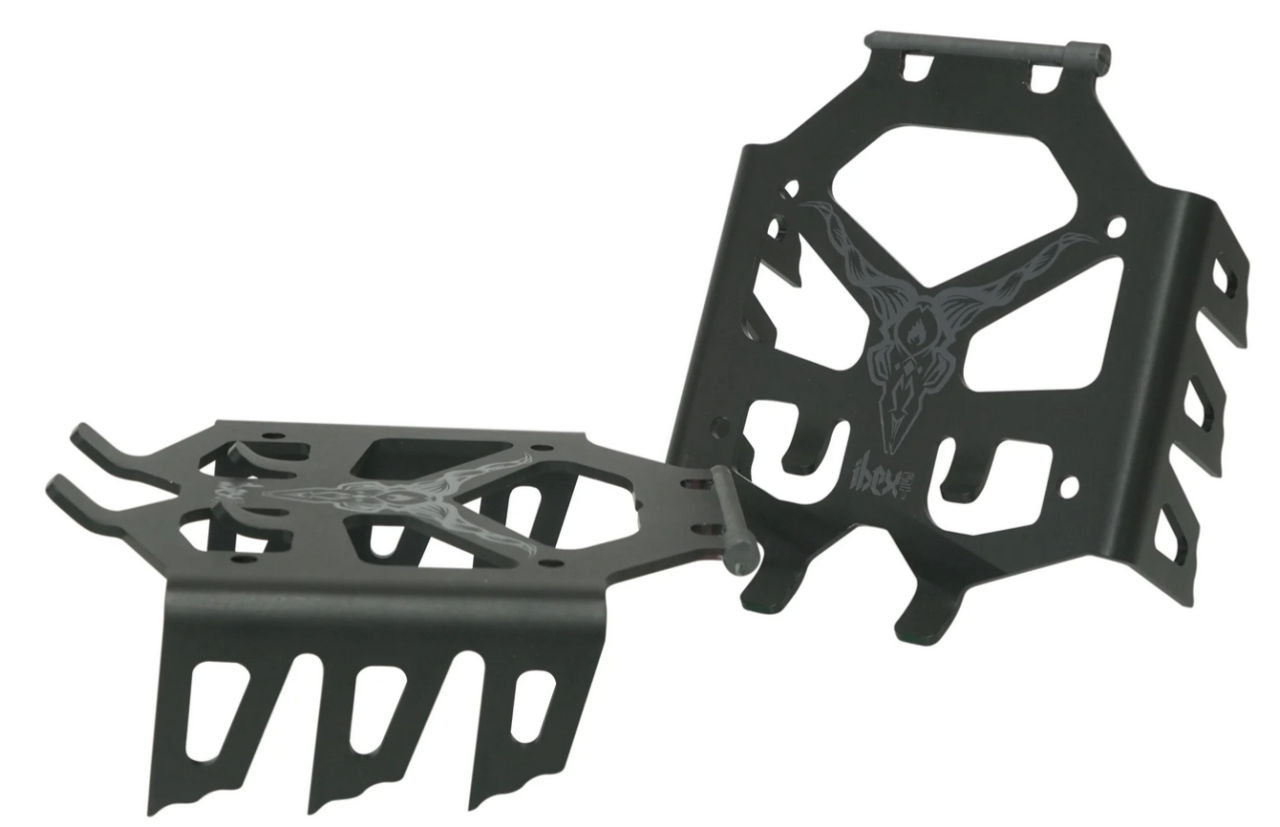
Arc ST/Pro and Surge ST/Pro with Ibex ST/Pro (narrow < 250, regular 250 - 260, wide > 260)

Burton Hitchhiker and Nitro Vertical ST like Spark Arc/Surge

Hardboot: Dyno DH and D Rex ST Pro (regular < 260, wide > 260)

Voilé

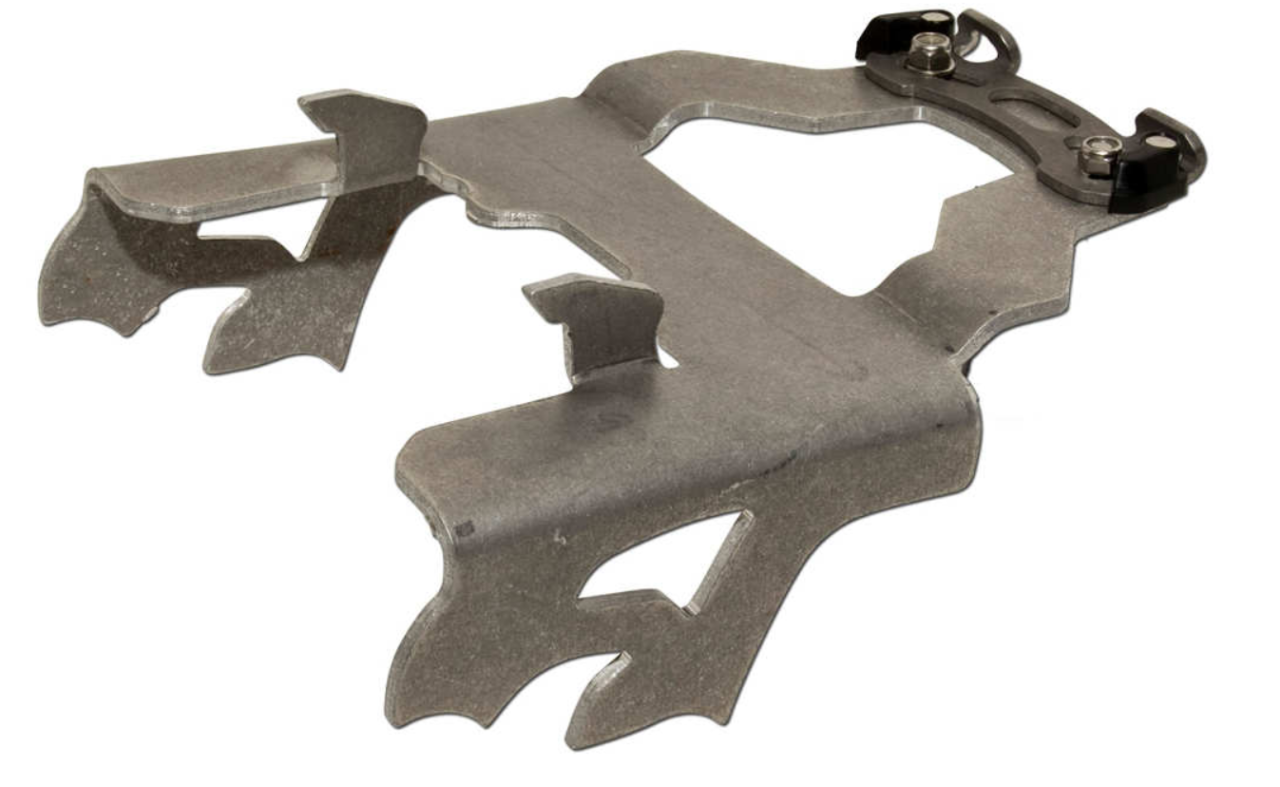
Light Speed binding with Light Speed Crampon (One Size < 280)

Speed Rail binding with Speed Rail Crampon (One Size < 264)

Light Rail binding with Light Rail Crampon (< 274) (gray)

DIY Splitkit self-builds require the classic Voilé crampon (< 274) (orange) with a longer pin. This is available for example at wildschnee.de.

K2 Far Out and Ride A-BC like Voilé Speed Rail

Hardboot: Hardboot STS Tour Toe Piece with Light Speed Crampon (One Size < 280)

Tip: both also with Dynafit (< 260) or ATK crampons (< 270) Karakoram: Prime System bindings with Prime Crampons (standard < 286, < 310.1)

Plum

ALL bindings with SK Split (< 260, 260 - 290)

Union

Charger or Explorer with Serrated Crampon (with corresponding holder, < 280, < 320)

Final word

But hey, even if you have the right iron in your backpack, it's not the end of the world. It should also work and not break on the way. I've experienced it all. Crampon mount bent or broken, crampon bar broken, crampon broken in itself. The ultimate lightweight construction may also have its disadvantages.

But now, as always, it's your turn again. We look forward to your comments on your experiences with or without crampons. Can you remember tours where the crampons saved you? Or tours where the lack of crampons led to the tour being aborted? Or tours on which the crampons had a defect and if so, which one and so on? Comment, comment, comment...!

Photo gallery

Note

PowderGuide.com is nonprofit-making, so we are glad about any support. If you like to improve our DeepL translation backend, feel free to write an email to the editors with your suggestions for better understandings. Thanks a lot in advance!

Show original (German)

Related articles

Comments