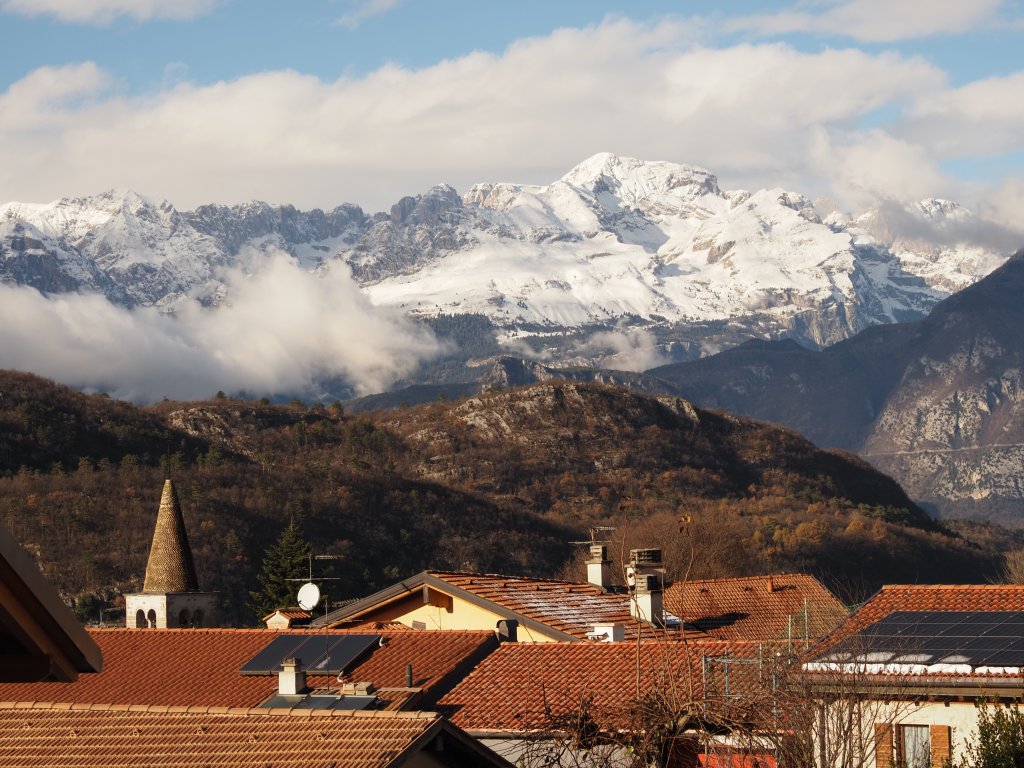
If you're often out and about in the backcountry, you know this moment: you're standing on a ridge and looking across to a promising slope. But a fish mouth, also known as a sliding snow crack, puts a damper on the euphoria. Questions arise: What does the entrance area look like? Have people already skied my favorite run today?
This is exactly where compact binoculars come into play. They are small enough to fit in a jacket pocket, but have enough optical power to make distant details visible.
The small binoculars are particularly helpful when you are trying to recognize old tear-off edges on distant slopes. Those fine traces of past snow movements that, from a distance, often appear to be harmless shadows and yet can be essential for correctly assessing safety. The remains of avalanche cones covered in snow are also much easier to identify with a little visual support. What often remains a guessing game with the naked eye becomes much easier to read with binoculars.
With more detail, the snow surface suddenly provides important information: Which direction did the wind come from? Where did it blow? Where did it move the snow? After all, anyone who has dealt with the topic of freeriding, and thus necessarily the topic of avalanche safety, is surely familiar with the phrase "The wind is the master builder of avalanches".